Skip to content


Weak market demand impedes gas penetration initiatives

Sopuruchi Onwuka
Upstream producers and downstream distribution players in the domestic gas market are stuck with stagnant growth in the demand end of the chain, causing government’s initiatives on gas penetration to hit a commercial glitch. And without robust infrastructural build out to connect last mile consumers, the prevailing programmes might not yield the desired results.

Industry pundits who examined the progress of the government’s Decade of Gas programme at the weekend stressed the need to urgently determine the real targets of gas penetration initiatives in order to refine the policy strategies in order to achieve the desired goals.
Oracle Intelligence reports that government has in the past 20 years tinkered with several policies and programmes to harness the country’s huge gas reserves to spur economic and industrial development.
More recently, there has been the Nigerian Autogas Policy, the Nigerian Gas Expansion Policy, Nigerian LPG Penetration Programme, the Presidential CNG Initiative, and many similar schemes.
Earlier policies and programmes which yielded positive but limited results including investments in gas monetization including liquefaction and export, regional supply pipelines, gas-to-liquid (GTL) plants and others were recently consolidated with the recent ones into the Decade of Gas programme.
However, the expected results and dividends from the Decade of Gas programme have proved very slow in creating robust domestic gas market that delivers affordable and cleaner fuel options to homes and businesses in the country.
With persistent pressure from gas producers for returns on solid investments in harnessing produced gas to meet domestic supply obligation, players in the retail end of the chain also struggle with limited results in expanding the market to accept greater volumes and enhance the economies of scale.
Whereas policy drivers in government continue assure the public that efforts are being maximized to bring the citizens cleaner and affordable energy for industrial, commercial and domestic applications; prices continue to defy mitigation.
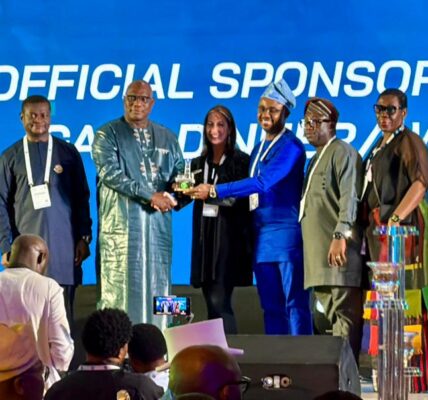
At the last Annual Energy Conference of the Association of Energy Correspondents of Nigeria (NAEC), panel discussants from Neconde Energy Limited, Rainoil Limited, Eterna Plc and Sahara Group emphasized the urgent need to make the domestic gas market deliver commercial returns to all investors assisting in the Decade of Gas programme.
Acting Managing Director and Gas Asset manager at Neconde Energy, Engr Chichi Emenike, demanded that commerciality of investments in providing gas to the domestic market has become critical in making projects bankable.
She stated that bankability of gas investments in providing the molecules that power electricity generation plants and fire home cooking requires that the capital deployed in providing the products returns to the investor with some margins.
All the panelists agreed that time has come for the domestic gas market to provide compelling signals for commercial return, challenging government’s policy and programme drivers and regulators to play their roles in providing common infrastructure and facilities that take gas to the last mile customers.
Chief Executive Officer of Eterna Plc, Mr Olumide Adeosun, who explained the frustration of the retail investors in the chain, stated that switching from traditional fuels to cleaner gas options requires capital investments from poor households in the country.

He also decried the low domestic gas cylinder and cooker production capacity at a time the country is driving massive gas penetration initiatives. He stated that cost of switching from traditional fuels, including kerosene, deters millions of Nigerian homes from adoption of gas for domestic application.
Panelists agreed that other programmes aimed at deepening the market should include policies that accelerate adoption of gas for diverse applications by making easier and affordable for the consumers.
Oracle Intelligence reports that the Presidential Compressed Natural Gas (PiCNG) Initiative which targets to popularize use of natural gas as alternative fuel for transportation in the country has not gained any level of traction with the motoring public because of the prohibitive cost of converting internal combustion engines to run on gas.
The main concerns, according to earlier survey conducted by our correspondents, are the high cost of conversion, availability of gas refuel outlets along major highways in the country and sustainability of CNG supply in the market.
To address the cost of conversion, Mr Adeosun proposed that government should incentivize conversion of heavy vehicles and industrial equipment to run on CNG while the mostly older vehicles that dominate private and local transit could be addressed later.
He also called on government to directly intervene with supply of adoption kits including gas cylinders, stoves and cookers to mainly rural and low income Nigerian homes to enable them overcome the cost of switching from dirtier kitchen fuels.
He, again, called for policies that make inclusion of gas reticulation infrastructure and facilities in future and existing residential estates mandatory in order to create more structured demand for liquefied petroleum gas (LPG) and compressed natural gas (CNG) for home applications.
Without developing the last mile demand centers through robust infrastructural development that connects the market with consumers, the panelist argue, the key objectives of the prevailing campaign for gas penetration might not be realized in good time.