Skip to content



Sopuruchi Onwuka
Muted plans by the Nigerian National Petroleum Company (NNPC) Limited to further divest government’s stakes in non operated joint oil exploration and production joint ventures is attracting counter narratives by labour unions and other stakeholders in the country’s economy.
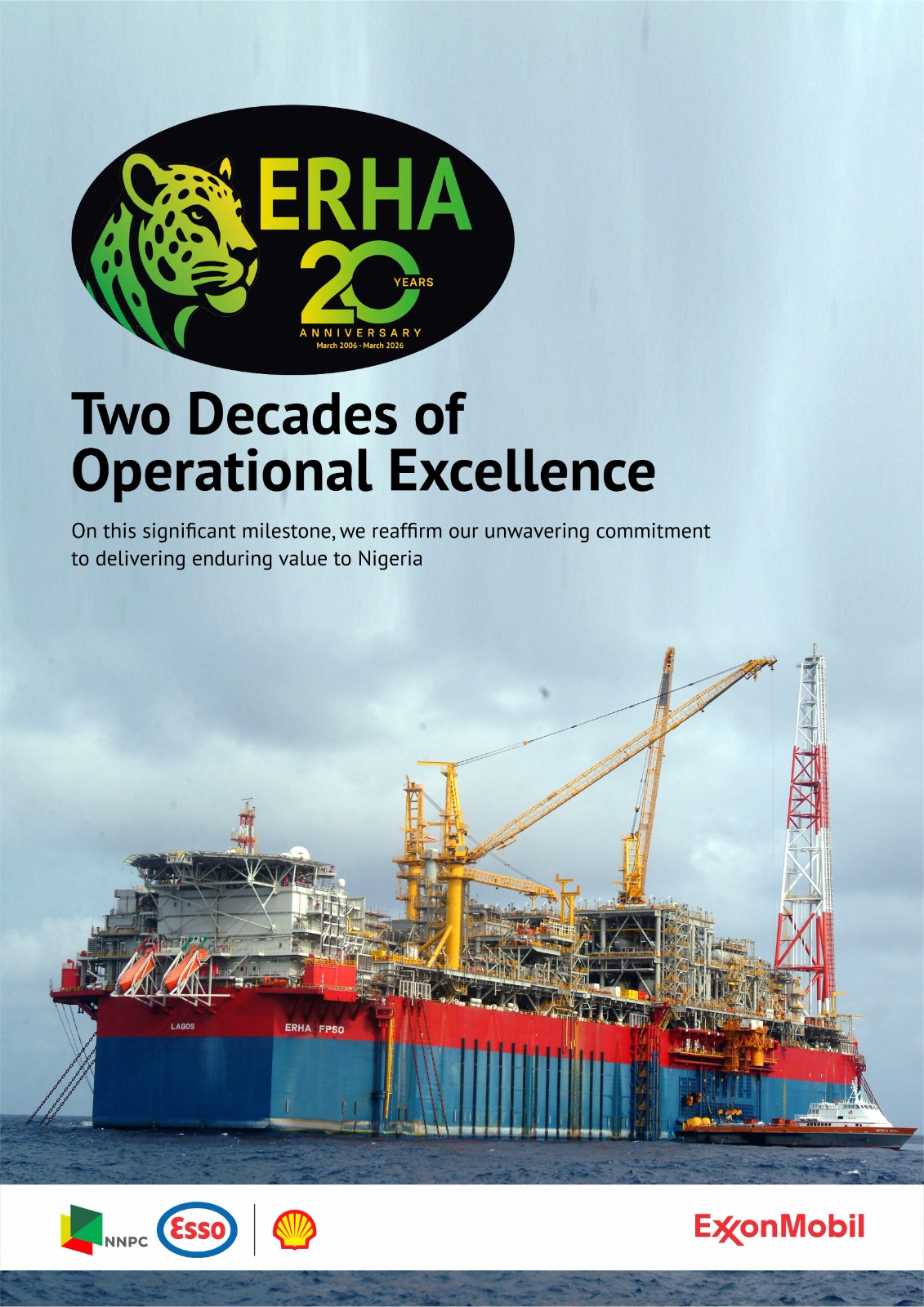
The and gas joint ventures are responsible for significant proportion of the country’s total foreign exchange earnings, 35 percent contribution to the gross domestic product and overall revenue support to the government’s annual fiscal budgets.
Government holds cumulative 67 percent interest in all the joint ventures that cover upstream petroleum industry operations in the onshore, swamp and shallow offshore terrains in the southern states of the country.
Industry labour unions at the weekend pushed out massive information campaigns mobilizing mass resistance to the planned divestment which appears to mirror similar moves by some three multinational oil companies in the country: Shell, ExxonMobil and Eni.
Consequently, only TotalEnergies and Chevron are the traditional international JV partners of the government still operating in the conventional terrains. Others have narrowed their portfolios to deepwater.
In the information kit distributed by members of the workers’ unions in the industry, they warned that NNPC is planning with strategic blunder by mulling further divestment of government’s stakes in the non-operated JVs.
They stated that “the Federal Government, through the Ministry of Petroleum Incorporated (MOPI) and the Ministry of Finance Incorporated (MOFI), is plotting to sell off some of the nation’s crown jewels our equity in key upstream oil and gas joint ventures. At the same time, it is scheming to amend the Petroleum Industry Act (PIA), a law that is barely out of the cradle.”
“ Both actions, if not resisted, will inflict irreparable damage on Nigeria’s economy, sovereignty, and future,” the workers stated in a briefing note.
“The plan is as brazen as it is reckless. In the Renaissance Africa Energy Company Joint Venture (RAEC JV), the Federation’s equity is 55%. Of this, 25% is set to be sold to Sterling Global Oil Company, an Indian firm, leaving Nigeria with a paltry 30%. In the Oando JV, the government is proposing to dispose of 25% of its 60% stake, handing it conveniently to Oando itself, led by Wale Tinubu. In the Seplat Energy Producing Nigeria Unlimited JV, 35% out of the 60% held by Nigeria will be sold to a company linked to Gilbert Chagoury, leaving the Federation with just 25%.
“What is at stake is not just percentages on paper. These joint ventures are the backbone of Nigeria’s oil and gas sector. They guarantee revenue, foreign exchange, jobs, skills, and national security. By ceding them to a few privileged individuals and their foreign partners, the government is effectively auctioning the nation’s economic soul. Once sold, these assets cannot be easily recovered. Worse, this sets a dangerous precedent for more disposals, robbing future generations of their rightful inheritance,” the notes added.
According to the notes which are fast spreading on encrypted social media channels and emails, the campaign drivers argue that the consequences of Nigeria losing control of its most strategic national assets, energy security, and revenue flows would expose the country to further debt and economic shocks.
They noted that jobs and local content drive might take a back seat as private interests dominate decision-making against sovereign interests in oil wealth.
Oracle Intelligence however reports that the industry is one of the most robustly regulated in Africa, and revenue flows are not limited to equity oil but spreads across the entire fiscal belt, from taxes, royalties, penalties and sundry levies.
On the push to amend the Petroleum Industry Act which was evolved to guide frameworks for stability, transparency, and investment in the sector, the industry workers allege that government now wants yank down some section of the law including sections 8, 9, 53, 63, 64, and 85.
“The motivation is not national interest but the selfish desire to transfer deepwater resources into the hands of a select few insiders. Such reckless tampering will only discourage investment, erode trust, and project Nigeria as an unstable environment where laws mean nothing.
“This raises unsettling questions. Is Nigeria so bankrupt that the only solution is to pawn off its assets? Why the rush to strip the nation bare at a time when the economy is gasping for air? How far will this administration go before Aso Rock itself is mortgaged for soft loans with watery moratoriums? Citizens are justifiably alarmed. What is unfolding looks less like governance and more like liquidation. President Bola Tinubu is appearing less as a national leader and more as Nigeria’s chief liquidator,” they allege.
“In the midst of this looming disaster, there is at least one glimmer of hope: the patriotic insiders within NNPCL who have sounded the alarm. These whistleblowers, at great personal risk, have pulled back the veil to reveal the shenanigans being dressed up as policy. Their courage deserves commendation. They remind us that not all hope is lost, that there are still Nigerians committed to defending the collective interest.
“The time has come for all citizens to rise in defense of their future. These assets do not belong to a ruling clique; they belong to the people. To sell them off in secrecy is to betray the very foundation of our national existence. If this fire sale is not halted, Nigeria may as well admit to winding up as a state. And once that process begins, the road back will be long, costly, and perhaps impossible,” the notes read in part.