Skip to content

Divestments: UN body indicts IOCs on remediation breaches

Sopuruchi Onwuka
The lingering concerns about who takes eventual responsibility for decommissioning of production facilities and remediation of oilfield environments have reached global arbitration despite earlier assurances that funding and roles have been resolved among deal parties.
A panel of the UN Working Group on Business and Human Rights declared that four international oil companies that have just concluded large portfolio divestments in Nigeria breached human rights obligations by failing to wipe off their operating footprints in local communities.
Oracle Intelligence reports that Shell, ExxonMobil, TotalEnergies, and Eni recently embarked on investment recovery in Nigeria by selling off their stakes in joint ventures they operated jointly with the Nigerian National Petroleum Company (NNPC) Limited.
Other international oil companies that divested non-operated assets in the country include ConocoPhillips, Petrobras, and Equinor. A unit of Addax Petroleum that operated in Nigeria was acquired by Sinopec whose operations were later usurped by the NNPC Limited.
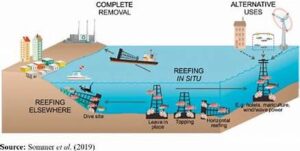
It is a global operating standard that companies exiting oilfields after production activities must decommission their production facilities, clean out pollution and restore the environment to natural state.
The UN Working Group stated that the international oil companies that sold of their portfolios in the country violated the standards by selling their assets before carrying out remediation for damage caused by their oil spills in local communities.
In letters written to the companies, the UN Working Group said Eni, ExxonMoil, Shell, and TotalEnergies, divested from Nigeria “without following a human rights-based approach and against international law obligations.”
Although there have been many farm-outs and farm-ins in the Nigerian upstream petroleum industry operations, the sales referenced by the UN body are mainly the sales of onshore stakes held by partners in the NNPC/Shell/TotalEnergies/Eni joint venture. They also include the sale of ExonMobil’s stake in the NNPC/MPNU joint venture.
Whereas the Shell JV asset sales have spawned a number of indigenous independent companies that currently operate the JVs in the country, the ExxoMobil JV asset sale transferred operating rights to Seplat Energy Producing Nigeria Unlimited (SEPNU). Before acquiring the Mobil Producing Nigeria Unlimited (MPNU), Seplat was established with the pioneer asset sale by the IOC partners in the Shell operated JV.
Indigenous Oando, which had in 2014 bought out ConocoPhillips from the NNPC Joint Venture operated by Eni’s Agip, finally bought out Italy’s Eni from the JV for significant $783 million; becoming the sole partner to NNPC and operator of the joint venture.
In the largest and last phase of its portfolio divestments that lingered across the past few years, Shell hauled in a $1.3 billion asset sale to Renaissance African Energy Company.
With the conclusion of the divestment deal, Renaissance now controls SPDC’s 30% stake in the SPDC JV, with NNPC maintaining it 55% stake, Total Exploration and Production Nigeria Limited holding 10% and Agip Energy and Natural Resources (Nigeria) Limited holding 5%.
Attempts by an Chappal Energy consortium to acquire TotalEnergies’ stake in the joint venture remains in limbo.
While the divestments are seen as part of realignment of business portfolios by the IOCs from fossil energy, and a veritable opportunities for growing indigenous exploration and production companies in line with the country’s Nigerian Content policy; the UN group allege it is also a ploy by the foreign companies to pass on significant $12 billion clean-up costs to the fledgling independent companies farming into the assets.
The Commission Chief Executive of the Nigeria Uptream Petroleum Regulatory Commission (NUPRC), Engr Gbenga Komolafe, declared at the signing of a new production sharing agreement with TotalEnergies-Sapetro consortium that the document also provided for financial contribution into the dedicated decommissioning fund hosted by the regulator.
The Oracle Today reports that Shell and other companies had in addressing the issue in Nigeria earlier declared their willingness to meet their decommissioning and remediation cost obligations in an arrangement that is in the custody of the authorities.
Erstwhile Country Chairman of Shell in Nigeria, Osagie Okunbor, had stated that the divestment of SPDC was merely to simplify Shell’s presence in Nigeria through an exit of onshore oil production in the Niger Delta and a focus of future disciplined investment in its deepwater and integrated gas positions.
Just recently Shell Nigeria Exploration and Production Company (SNEPCo) entered deal to acquire 12.5% stake from TotalEnergies EP Nigeria Limited and increases its operating interest in the OML 118 Production Sharing Contract (PSC) from 55% to 67.5%. The OML 118 PSC is an oil mining lease offshore Nigeria that includes the producing Bonga field.
“Following our final investment decision on Bonga North last year, this acquisition brings another significant investment in Nigeria deep-water that contributes to sustained liquids production and growth in our Upstream portfolio,” said Peter Costello, Shell’s President, Upstream.