Skip to content

NUPRC puts more lenses on oil export processes to curb leakages

- Oil theft down to 5kbd, output up to 1.7 mbd
Sopuruchi Onwuka
Federal government says it is driving a set of measures to ensure enhanced transparency in the nation’s petroleum export processes, plug revenue leakages and curb resource theft in the industry.
The Nigerian Upstream Petroleum Regulatory Commission (NUPRC) declared weekend that part if the fiscal transparency measures include regulations on hydrocarbon metering, fiscal oil price determination, and cargo declaration systems.
Already, the measures and other interventions have significantly reduced the volume of stolen oil from the Nigerian upstream sector to 5,000 barrels of oil per day (BOPD) and helped elevate production to steady 1.7 million BOPD.
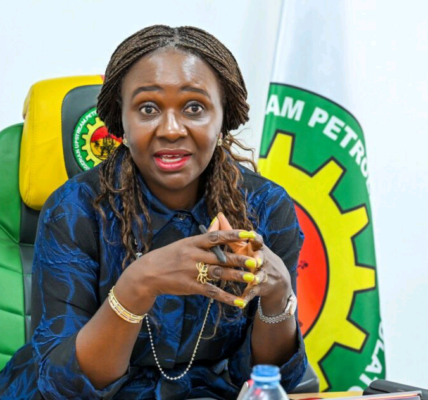
Commission Chief Executive of the NUPRC, Engr. Gbenga Komolafe, who delivered a presentation at the Renewed Hope Global Town Hall Conference in Abuja stated that the paradigm shift was conceived to enhance Nigeria’s push for energy security and economic growth.
Engr. Komolafe blamed the nation’s drastic oil production drop to 1.1 million BOPD in 2022 on challenges relating to oil theft and industry facility vandalism, saying that some kinetic and non-kinetic interventions measures deployed by the government have significantly reduced stolen volumes to 5,000 BOPD, leading to a steady production increase to 1.7 million BOPD.
He pledged to work with the industry to increase production by 1 million BOPD by December 2026 under the Project 1 MMBOPD initiative. The efforts, he said, would leverage collaboration among operators, service providers, financiers, and host communities.
He also said that the Nigeria Gas Flare Commercialization Programme (NGFCP) remains at the forefront of the country’s energy transition strategy to eliminate routine gas flaring, reduce methane emissions, and encourage carbon capture technologies.
He added that the Carbon Credits Earning Framework also seeks to monetize decarbonization efforts while promoting sustainable energy practices.
On revenue growth and financial performance, Engr Komolafe declared that NUPRC outperformed its budgeted revenue collection by 84%, marking a strong financial performance for Nigeria’s upstream sector.
On Host Community Engagement and Regulatory Transparency, he said NUPRC has incorporated 137 Host Community Development Trusts (HCDTs) to foster local participation and stability in oil-producing regions.
Engr Komolafe pointed at the Alternative Dispute Resolution Centre (ADRC) as a potent measure to efficiently resolve conflicts and reduce disruptions to oil and gas operations.
In light of all these developments, Engr. Komolafe emphasized that Nigeria is more ready for business than ever, citing the government’s commitment to regulatory certainty, investment-friendly policies, and global competitiveness.
“With a stable political environment, a growing gas economy, and a clear roadmap for energy transition, Nigeria positions itself as a prime destination for energy investments in Africa,” he stated.
He reaffirmed NUPRC’s commitment to collaborating with global investors, financiers, and energy stakeholders to unlock the nation’s full hydrocarbon potential while driving sustainable development.
Engr. Komolafe said that Africa accounts for five of the world’s top oil-producing countries, with Nigeria standing as the continent’s second-largest oil reserve holder and the largest gas reserve holder.
He noted that the country’s oil reserves is estimated at 37.5 billion barrels (Bbbls), while gas reserves stand at 209 trillion cubic feet (TCF). Nigeria’s oil production currently averages 1.75 million barrels per day (BOPD), with a gas production rate of 7 billion standard cubic feet per day (SCFD), he clarified.
Engr Komolafe stated that NUPRC has driven several initiatives since 2021 to enhance regulatory effectiveness and attract investments; adding that the commission unveiled its 10-year Regulatory and Corporate Strategic Plan (2023–2033) in May 2023, followed by a Regulatory Action Plan for 2024, detailing key industry reforms.
These reforms, according to him, “focus on increasing oil and gas reserves and production, enhancing hydrocarbon accounting transparency, achieving cost efficiency and decarbonization in upstream operations, ensuring stability in host communities, and reducing the carbon footprint of oil and gas activities.”
On the 2024 Licensing Round and Investment Drive, Engr. Komolafe highlighted that NUPRC launched its 2024 Licensing Round, offering 24 oil and gas assets to investors. To attract global participation, the commission held roadshows in Houston, Miami, London, and Paris, showcasing Nigeria’s energy potential.