Skip to content

Insurers redraw Middle East risk map as Houthis escalate attacks

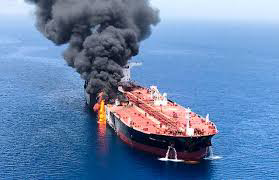
Marine insurers in London have expanded the Red Sea area classified as high-risk for commercial shipping following a series of attacks by Yemen’s Iran-backed Houthi rebels on Saudi-linked vessels, underscoring mounting threats to one of the world’s most critical energy and trade corridors.
The revised advisory was issued on July 29 by the influential Joint War Committee (JWC), whose assessments guide war-risk insurance premiums for global shipping. The committee comprises members of the Lloyd’s Market Association and other leading British marine insurers.

Under the updated guidance, the high-risk zone now extends further into the northern Red Sea, reflecting the deteriorating security environment.
The review follows the Houthis’ July 20 announcement of a maritime blockade targeting Saudi Arabia’s Red Sea ports and vessels, opening a new front in the broader regional confrontation involving Iran, the United States and its Gulf allies.
Within days of the declaration, Houthi forces claimed attacks on two Saudi oil tankers and threatened to close the Bab el-Mandeb Strait—the southern gateway to the Red Sea—to Saudi shipping.
“Two Saudi-linked vessels were attacked in the first few days after the Houthi announcement,” the Joint War Committee said in its bulletin, explaining that it had shifted the Red Sea notification line northwards to reflect the increased threat.
While the committee has not yet designated Egypt’s coastal waters as a high-risk zone, concerns escalated on Wednesday after drones struck Egypt’s Damietta Port on the Mediterranean coast near the northern entrance to the Suez Canal, another vital artery for global maritime trade.
No group has claimed responsibility for the attack.
The Houthis, however, denied involvement. According to the Houthi-affiliated Saba News Agency, an official in the group’s foreign affairs office dismissed reports linking the movement to a drone strike on a U.S.-owned and operated natural gas storage vessel at Damietta Port, describing the claims as “unfounded.”
The latest developments have heightened concerns across the global shipping and energy industries, with insurers, shipowners and traders closely monitoring the rapidly evolving security situation.
The Red Sea, Bab el-Mandeb Strait and Suez Canal together handle a substantial share of global oil, liquefied natural gas and container traffic. Any prolonged disruption could force vessels onto longer alternative routes around southern Africa, increasing voyage times, insurance costs and freight rates while placing further pressure on global energy markets.
The escalation also comes days after Nigeria joined a Saudi Arabia-led multinational maritime security coalition established to safeguard shipping routes through the Strait of Hormuz, the Bab el-Mandeb Strait, the Red Sea and the Gulf of Aden. The coalition was formed to counter growing threats to commercial navigation and protect international trade and energy supply routes amid rising regional tensions.