 Skip to content


Heritage strengthens Nigeria’s technical workforce with 54,672 training hours

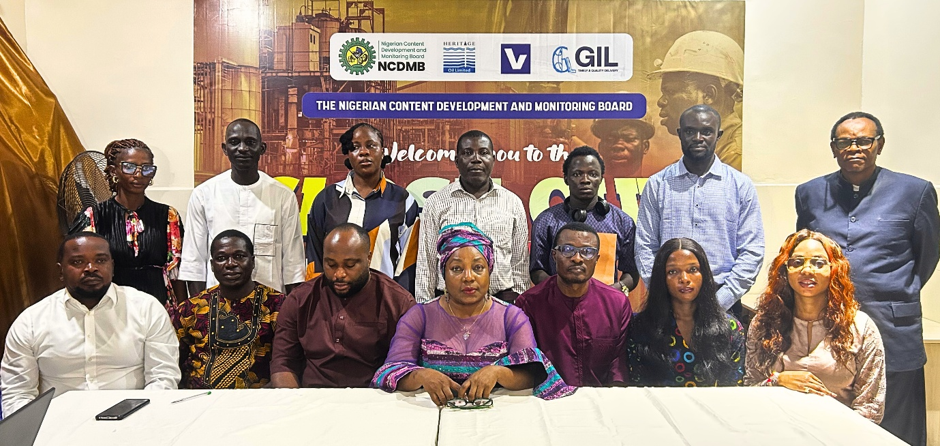
Heritage Energy Operational Services Limited (HEOSL) has strengthened Nigeria’s technical workforce by equipping 32 young Nigerians with industry-ready skills through a series of Human Capacity Development (HCD) programmes completed over the past year.
HEOSL operates the Oil Mining Lease (OML) 30 on behalf of the joint venture between NNPC E&P Limited (NEPL) and Shoreline Natural Resources Limited (SNRL).

The company announced successful completion of its Nigerian Content Human Capacity Development (NC-HCD) programme in Warri, bringing the total training delivered across its recent capacity development initiatives to more than 54,672 man-hours through structured classroom instruction, internationally recognized certifications and intensive on-the-job training.
The programmes, according to a statement made available to Oracle Intelligence on Monday, covered critical oil and gas disciplines, including mechanical engineering design, procurement and supply chain management, project cost engineering, safety engineering, crane operations, scaffolding and other technical competencies required across the energy value chain.
Heritage Energy’s Nigerian Content Development Manager, Felix Usiwo, said the company’s sustained investment in human capacity reflects its conviction that people remain the industry’s most valuable asset and the foundation for advancing Nigerian Content.
According to him, developing local talent is essential to ensuring the long-term sustainability of Nigeria’s oil and gas industry.
“The industry needs people who can step into demanding technical roles with confidence, which is why we invest in training that combines classroom learning with practical experience, giving participants the skills, exposure and confidence they need to succeed in the workplace,” he said.
The Nigerian Content Development and Monitoring Board (NCDMB) commended Heritage Energy for its consistent investment in developing local capacity and urged greater collaboration among industry stakeholders to build a stronger technical workforce for the country.
Representing the Executive Secretary of the NCDMB, Felix Omatsola Ogbe, at one of the programme close-out ceremonies, the Board’s Manager of Human Capacity Development, Tarilatei Teide-Bribena, described human capacity development as central to the Board’s mandate of increasing Nigerian participation across the oil and gas value chain.
“The NCDMB and the Federal Government cannot do it alone. We need stakeholders to collaborate with us, share in the vision behind the Board’s creation, and ensure this mandate is fulfilled. This will guarantee that the next generation of highly qualified professionals can successfully enter the industry,” Teide-Bribena said.
For Heritage Energy, the success of the programmes is reflected in the achievements of beneficiaries who have acquired practical skills and internationally recognized certifications that position them for careers in Nigeria’s energy industry.
One of the beneficiaries, Esther Amarachukwu Agbasoga, said the programme challenged her perception of women’s participation in technical occupations, noting that she never imagined a woman could become a crane operator or scaffolder.
“Today, I can proudly say I am both,” she said, describing the training as a life-changing opportunity that has opened new career prospects in highly specialized technical fields while demonstrating that women can thrive in roles traditionally dominated by men.
Other participants also described the initiatives as transformational. Augustine Ocheche said the programme significantly improved both his technical competence and professional confidence, while Stanley Okwuonu, who participated in the SCADA Human Capacity Development programme, commended Heritage Energy for its strong emphasis on participants’ welfare and practical learning throughout the training.
The company reported that the DBN NC-HCD programme recorded an estimated 95 percent competency success rate, with participants achieving a 100 percent pass rate across all completed disciplines, underscoring the quality and effectiveness of the training.
Heritage Energy said human capacity development remains a key pillar of its Nigerian Content strategy as it continues to invest in developing indigenous capability and preparing the next generation of highly skilled technical professionals for Nigeria’s energy industry.



